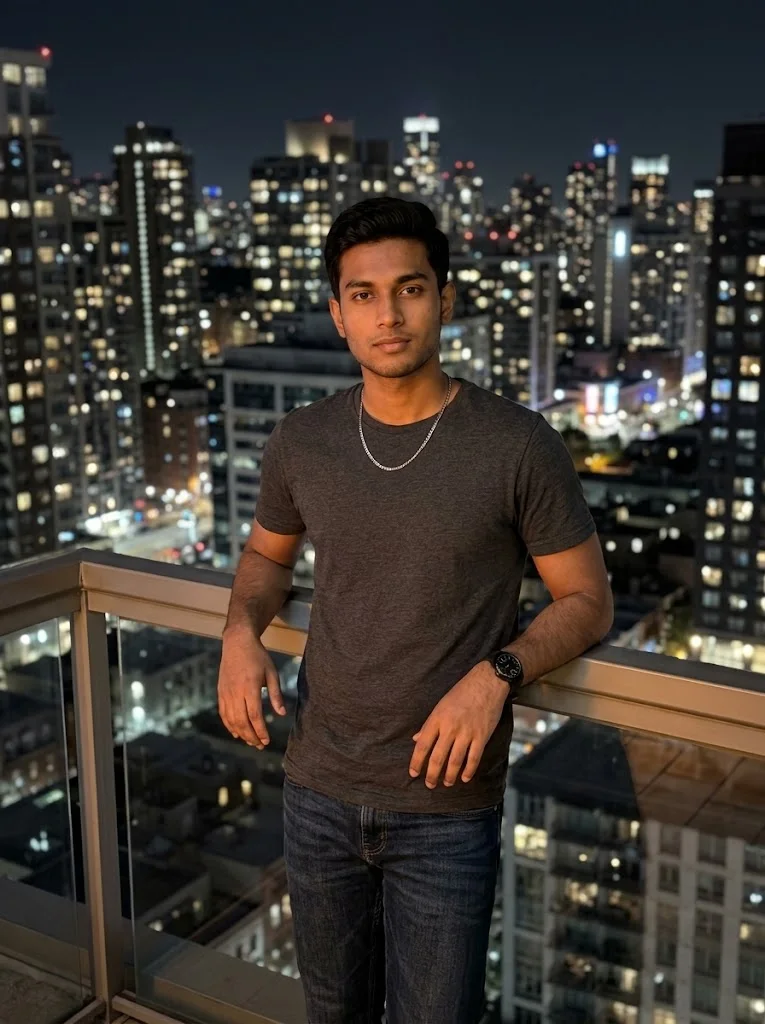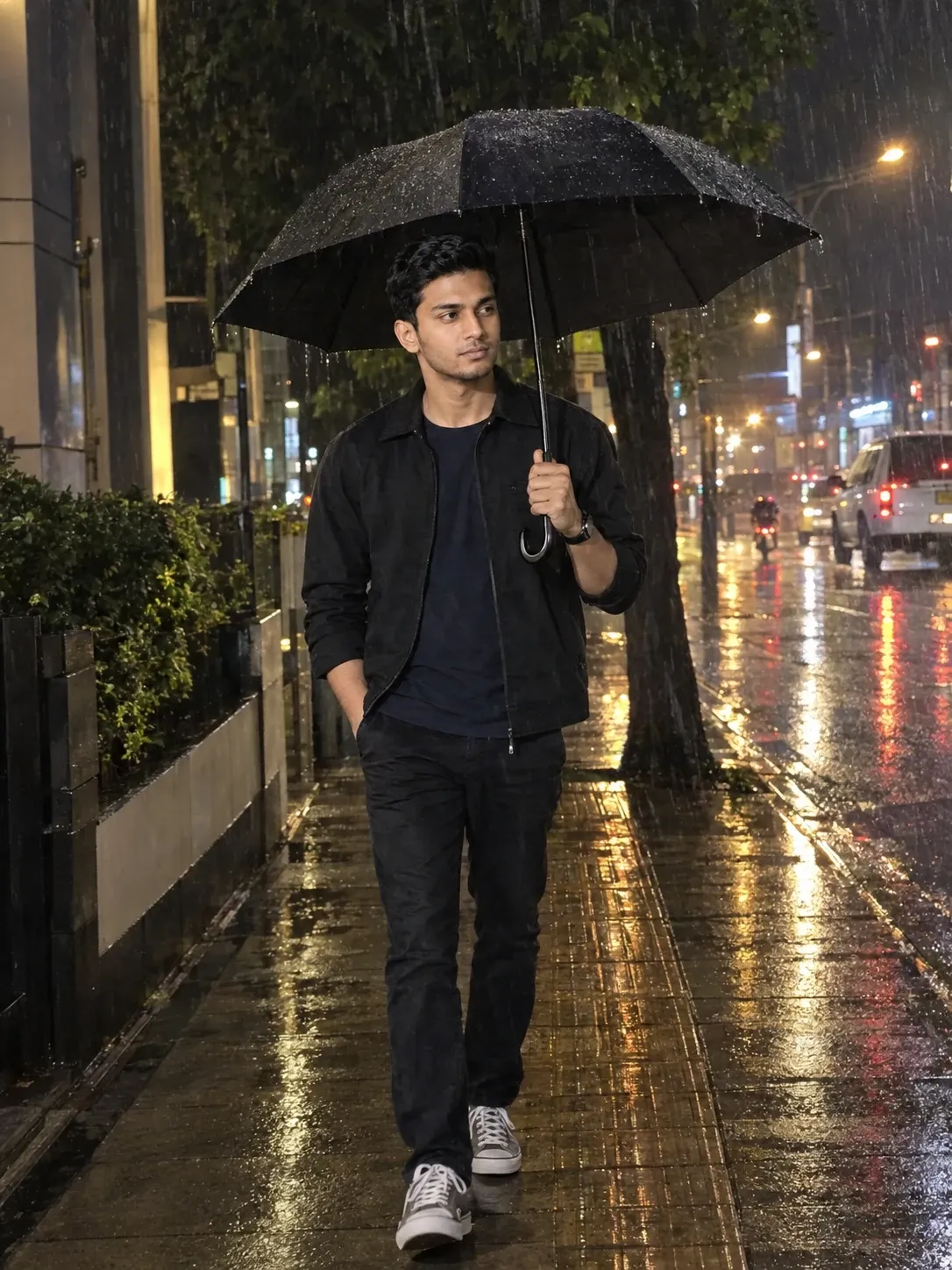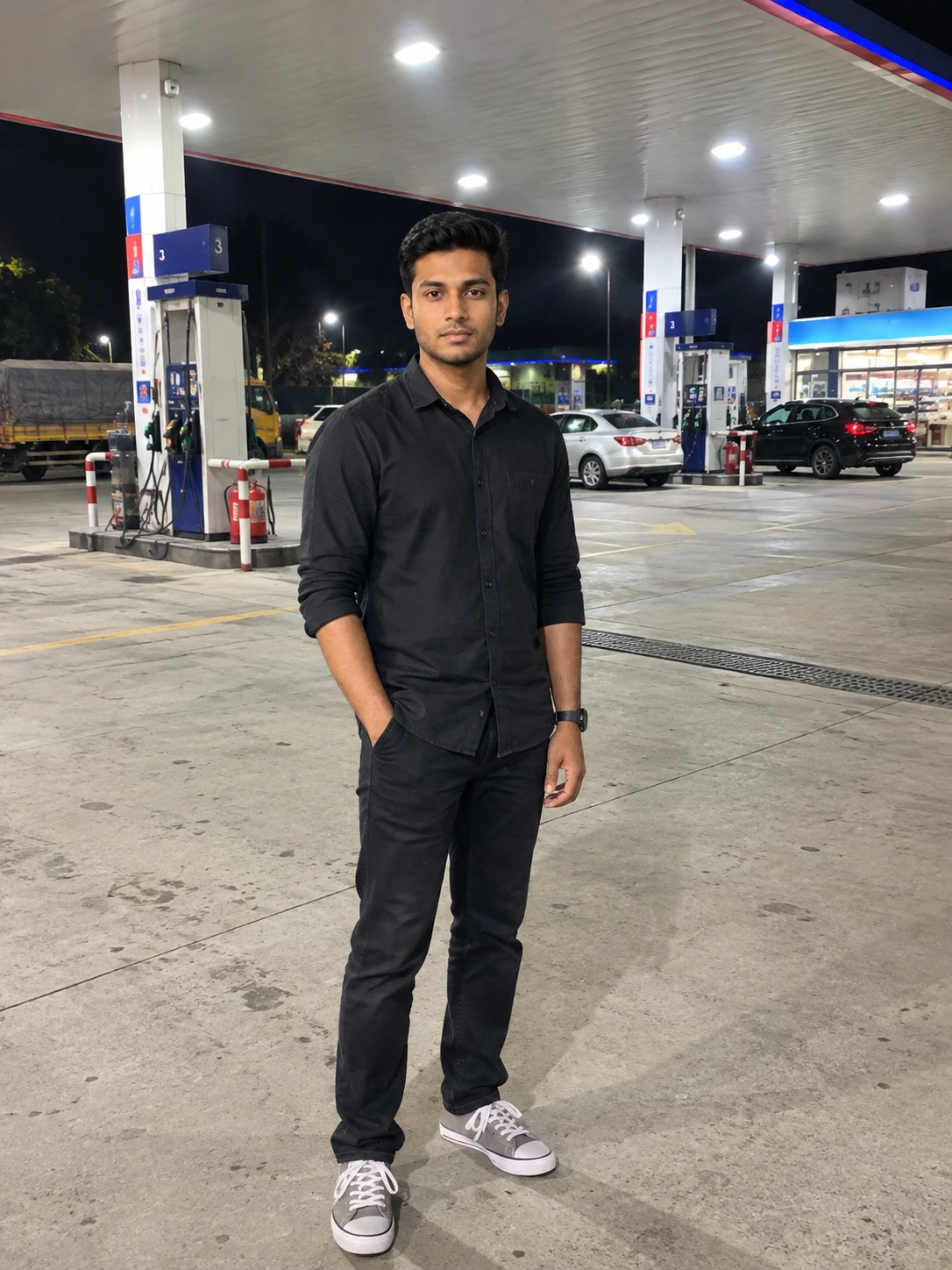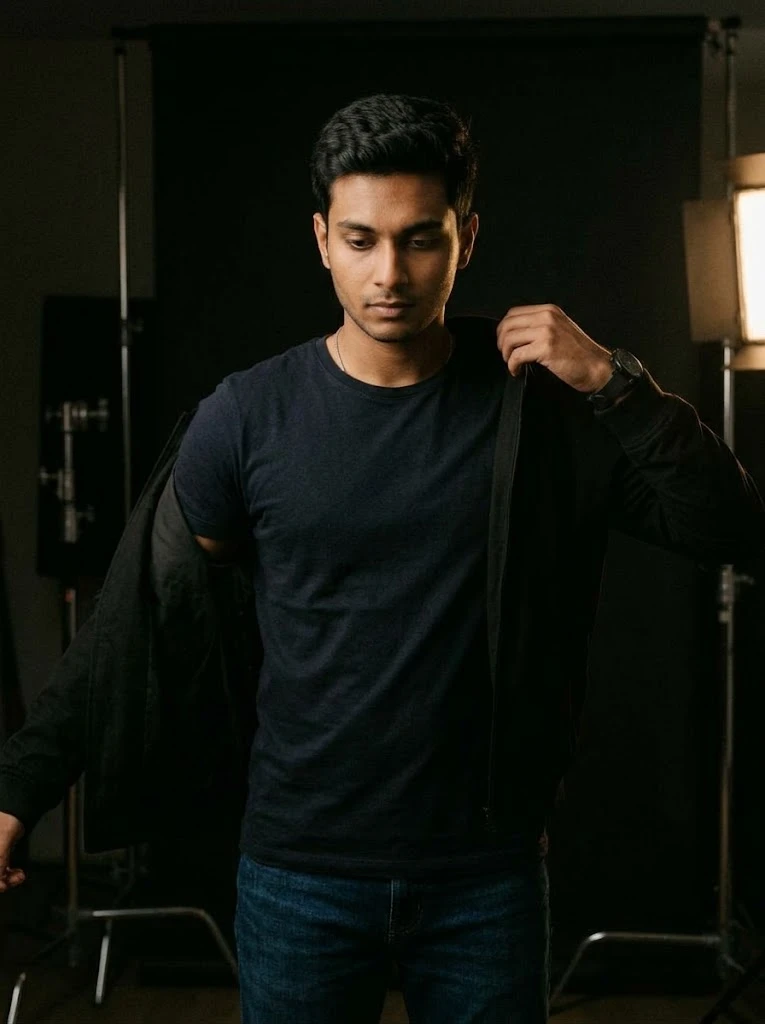
Dark Cinematic Black Outfit AI Photo Prompt
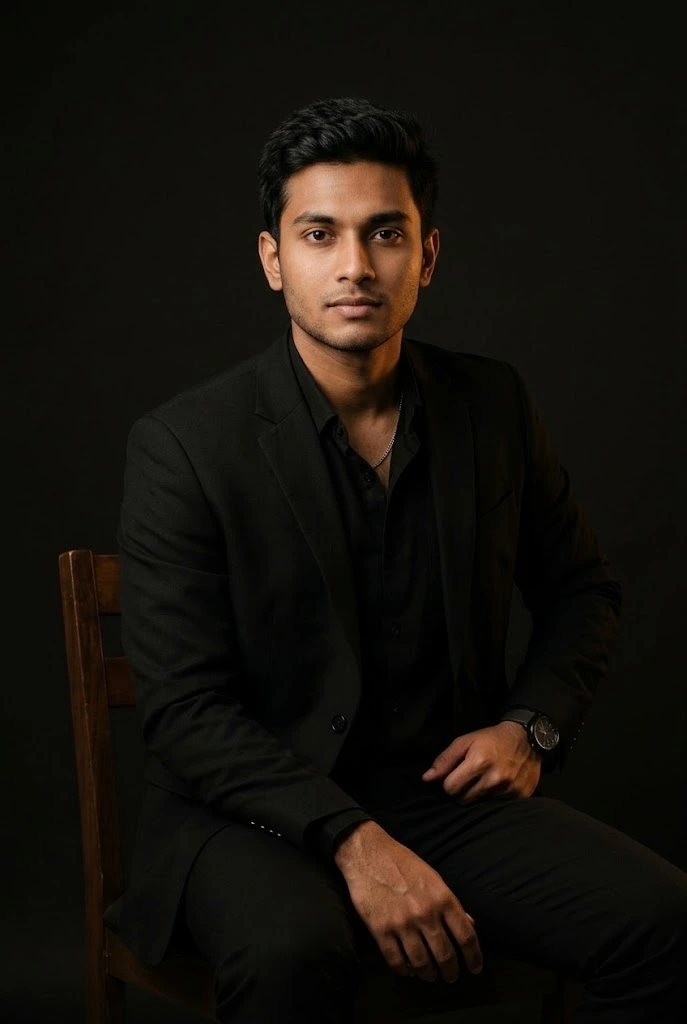
Create a dark, cinematic studio photo using your uploaded image as the identity reference. This copy-and-paste AI image prompt is designed for ChatGPT and Gemini, helping you achieve an elegant black outfit, a natural seated pose, and professional studio lighting while keeping your original appearance recognizable.
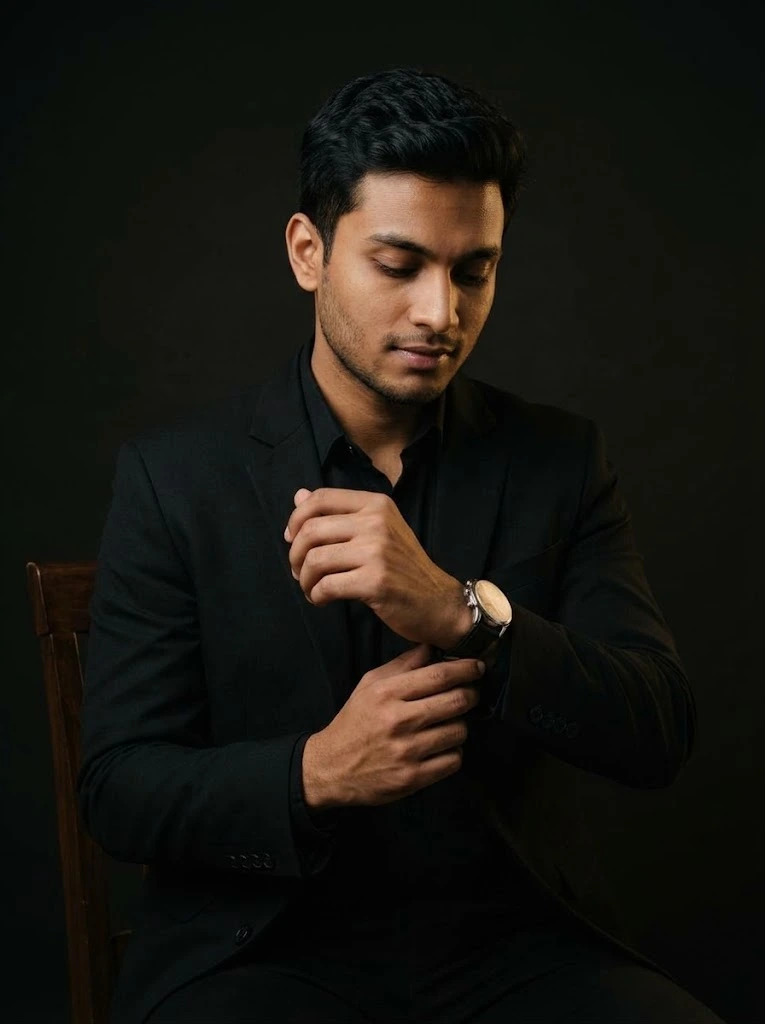
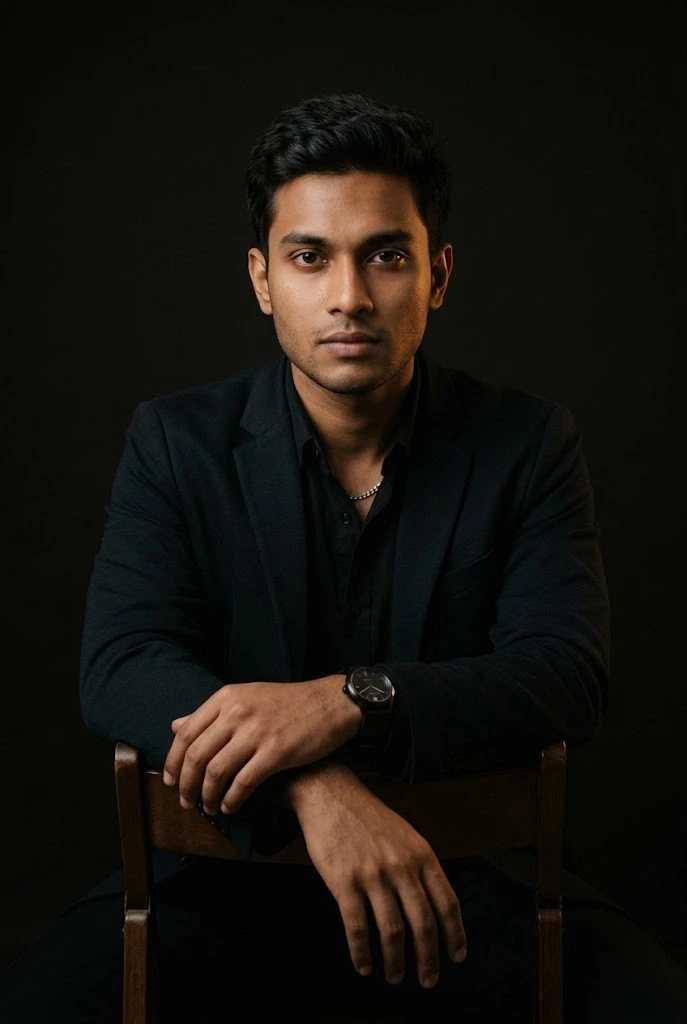
The scene features the person sitting comfortably on a dark wooden chair against a nearly black background. A fitted black blazer over a simple black shirt creates a refined look, while warm amber side lighting adds depth and softly illuminates the face and hands. The vertical composition highlights the person's expression, clothing, and relaxed body language.
The prompt prioritizes the original facial features, apparent age, skin tone, hairstyle, and natural body proportions. It also emphasizes lifelike eyes, authentic skin texture, realistic hands, and visible black fabric details to avoid an artificial, doll-like appearance.
Use this prompt when searching for a dark cinematic AI photo, black outfit photo editing, moody studio photography, or a realistic ChatGPT or Gemini image prompt.
For the best results, ChatGPT is the recommended choice for generating the image from your reference photo. Gemini is an alternative, but results can vary depending on the model and how it interprets the prompt and uploaded image.
The scene features the person sitting comfortably on a dark wooden chair against a nearly black background. A fitted black blazer over a simple black shirt creates a refined look, while warm amber side lighting adds depth and softly illuminates the face and hands. The vertical composition highlights the person's expression, clothing, and relaxed body language.
The prompt prioritizes the original facial features, apparent age, skin tone, hairstyle, and natural body proportions. It also emphasizes lifelike eyes, authentic skin texture, realistic hands, and visible black fabric details to avoid an artificial, doll-like appearance.
Use this prompt when searching for a dark cinematic AI photo, black outfit photo editing, moody studio photography, or a realistic ChatGPT or Gemini image prompt.
For the best results, ChatGPT is the recommended choice for generating the image from your reference photo. Gemini is an alternative, but results can vary depending on the model and how it interprets the prompt and uploaded image.
📝 Prompt 1
Edit the uploaded photograph into a highly photorealistic, professionally composed dark cinematic portrait of the exact same person. Treat the uploaded photograph as the authoritative identity reference. The objective is to improve the outfit, seated pose, lighting, and overall photographic presentation without redesigning the person's face, changing their age, or altering their natural body shape.
The final image must look like a genuine photograph of a real person captured in a professional studio, with natural eyes, authentic facial expression, realistic skin texture, and comfortable body language. Avoid the artificial, lifeless appearance often produced by overly polished AI portraits.
1. ABSOLUTE ORIGINAL FACE AND IDENTITY PRESERVATION
Preserve the exact identity of the person in the uploaded photograph. The result must depict the same individual, not a similar-looking person or a newly generated face.
Maintain the original facial structure and proportions, including:
- Original face width, forehead, hairline, and natural facial asymmetry.
- Exact eye shape, eye size, eye spacing, eyelids, and eyebrow shape.
- Original nose bridge, width, length, tip, and nostrils.
- Original lip shape, mouth width, cheeks, jawline, and chin.
- Original ears, their shape, size, and position.
- Original skin tone, natural skin texture, pores, and distinctive facial details.
- Original hairstyle, hairline, and any visible facial hair.
- Original neck, shoulders, and overall head-to-body proportions.
Do not reconstruct, replace, idealize, beautify, or reinterpret the face. Do not sharpen the jaw artificially, narrow the nose, enlarge the eyes, modify the lips, change the ears, or make the face thinner, fuller, wider, or more symmetrical.
The face must remain unmistakably recognizable as the same person, even under dramatic studio lighting.
2. EXACT APPARENT AGE PRESERVATION
Preserve the person's original apparent age exactly as represented in the reference image.
If the uploaded person looks 18, the final result must still look approximately 18, not 23, 25, or older. Apply the same rule regardless of the person's apparent age.
Do not add mature facial features, artificial wrinkles, deeper facial lines, excessive beard growth, or other details that make the person appear older. Do not make the person look younger either.
The dark cinematic styling must not change the person's natural facial maturity. A serious expression and dramatic lighting must never be used as an excuse to create an older-looking face.
3. STRICT ORIGINAL BODY SHAPE AND PHYSIQUE
Preserve the original body build and proportions from the uploaded image.
Do not enlarge the shoulders, broaden the chest, add artificial muscles, slim the waist, increase body weight, change the neck thickness, or reshape the arms and hands.
The seated position may naturally alter the visible perspective, but the person's underlying physique must remain unchanged. The blazer must fit the existing body naturally rather than creating a different body shape.
Maintain realistic proportions between the head, neck, shoulders, torso, forearms, hands, and legs.
4. BLACK OUTFIT AND REFINED CINEMATIC STYLING
Replace the original clothing with a sophisticated, minimalist black outfit.
Dress the person in a well-fitted black blazer over a simple black shirt. The blazer should have realistic tailoring, natural shoulder structure, believable lapels, subtle fabric texture, and natural folds around the elbows and torso.
Keep the outfit elegant and understated rather than excessively luxurious or exaggerated. A subtle silver chain may be included if it complements the composition, but it must remain discreet and realistic.
The clothes should fit the person's original body proportions without making the shoulders broader, the chest larger, or the waist slimmer.
Preserve the original hairstyle and facial hair. Do not introduce a different haircut, artificial beard, or fashion-model makeover.
5. NATURAL SEATED POSE ON A DARK WOODEN CHAIR
Place the person sitting comfortably on a simple dark wooden chair against a nearly black, seamless studio background.
Position the torso slightly toward the camera, with a subtle natural angle rather than a perfectly symmetrical, rigid posture.
Let one forearm rest naturally on the thigh. Position the other hand comfortably near the waist, resting on the opposite thigh or in another anatomically natural position.
Keep the shoulders relaxed, the spine naturally aligned, and the neck comfortable. The hands must have realistic fingers, correct joints, natural skin folds, and believable contact with the clothing or body.
Avoid exaggerated leaning, stiff shoulders, rigid arm placement, unnaturally crossed limbs, floating hands, or an artificial mannequin-like pose.
The posture should communicate quiet confidence and maturity without changing the person's apparent age or physical build.
6. REAL HUMAN EYES AND A NATURAL FACIAL EXPRESSION — NO DOLL-LIKE STARE
This requirement is especially important.
Give the person a calm, serious, confident expression with naturally relaxed lips and authentic facial muscle positioning. The expression must look like a real human being photographed during a quiet moment, not a digitally constructed character.
Keep the eyes anatomically accurate and naturally expressive. Preserve their original shape, size, spacing, eyelids, and surrounding features.
Use direct eye contact with the camera only if it looks natural. The gaze should feel attentive, relaxed, and human, with a subtle sense of focus rather than a fixed, empty stare.
Avoid unnaturally wide-open eyes, perfectly symmetrical eyes, exaggerated iris visibility, artificial catchlights, glassy eyes, frozen eyelids, rigid pupils, and an expressionless face.
Allow tiny natural differences between the left and right sides of the face. Keep the eyebrows relaxed and the mouth naturally positioned. Do not force a smile, exaggerated frown, or overly intense expression.
The eyes must look alive and naturally focused, with realistic reflections that match the studio lighting. Do not invent reflections, make the eyes glow, or produce a glass-doll appearance.
The person should look like a real man naturally holding a composed expression for a portrait photograph, not like a statue, mannequin, doll, or AI-generated fashion model.
7. CONTROLLED WARM AMBER SIDE LIGHTING
Use controlled, soft warm-amber side lighting to illuminate the face, visible hand, and selected areas of the black outfit.
Create gentle transitions between illuminated skin and natural shadows. Preserve visible detail in both the highlights and darker areas of the face.
The lighting should reveal the original facial features rather than reshape them. Keep the eyes, nose, lips, cheeks, ears, and jawline clearly identifiable.
Use a nearly black studio background with subtle tonal separation between the person's hair, shoulders, blazer, and background.
Avoid completely crushed facial shadows, excessively orange skin, artificial glowing edges, harsh highlights, extreme contrast, and dramatic lighting that hides or distorts the original face.
The result should be dark and cinematic while remaining clear, realistic, and naturally exposed.
8. REALISTIC SKIN AND BLACK FABRIC TEXTURE
Preserve authentic skin texture, including natural pores, subtle skin variations, and realistic highlights. Do not excessively smooth the skin or create a plastic, waxy, glossy, or airbrushed appearance.
The black blazer and shirt must retain visible fabric details. Use subtle differences in texture and light reflection to distinguish the garments from the dark background.
Keep the hands consistent with the person's original skin tone and natural appearance. Avoid artificial skin whitening, excessive sharpening, painted textures, or unrealistic surface details.
If the original face is slightly blurry, apply only gentle clarity enhancement. Do not reconstruct or redesign facial features to make them appear sharper.
9. PROFESSIONAL CAMERA AND COMPOSITION
Create a vertical 2:3 portrait with a balanced medium or three-quarter seated composition.
Show enough of the chair, torso, arms, and hands to communicate the pose clearly while keeping the face as the main focal point.
Use a natural portrait-lens perspective, realistic depth of field, and professional framing. Keep the face in crisp focus without exaggerating skin details or artificially sharpening the eyes.
Maintain realistic head size, body proportions, perspective, and anatomy. The final image should resemble a high-quality photograph captured by an experienced portrait photographer using controlled studio lighting.
Avoid excessive background blur, fake film grain, artificial lens effects, overprocessed HDR, and unrealistic cinematic color grading.
10. FINAL IDENTITY AND REALISM CHECK
Before finalizing the image, prioritize the following:
- The face must belong to the exact same person as the uploaded reference.
- The original apparent age must remain unchanged.
- The original eyes, eyebrows, nose, lips, jawline, ears, face width, and skin tone must remain faithful to the reference.
- The original body build and proportions must not be reshaped.
- Only the requested outfit, pose, background, lighting, and photographic styling should change.
- The expression and eyes must appear naturally human, never frozen, glassy, vacant, or doll-like.
- The skin, hands, clothing, and anatomy must remain photorealistic.
- The dark lighting must preserve facial visibility and identity accuracy.
If any cinematic effect makes the person look like a different individual, reduces facial recognizability, or produces an artificial expression, reduce that effect.
FINAL PRIORITY RULE: Preserve the original person first. Improve the outfit, pose, lighting, and composition second. Create a dark, elegant, realistic studio portrait with a naturally expressive human face, authentic skin texture, correct anatomy, and no artificial doll-like appearance.
You May Also Like
Use this prompt :
Google Gemini
How to Use This Prompt
1. For the recommended result, open ChatGPT. You can also use Google Gemini as an alternative.
2. Upload your original photo to serve as the identity reference.
3. Copy and paste the complete Dark Cinematic Black Outfit AI Photo Prompt into the chat and request image generation.
4. Check that the generated image preserves your face, apparent age, hairstyle, and body proportions while applying the black outfit, seated pose, dark background, and warm amber lighting.
5. If needed, request corrections to specific details, such as natural eyes, realistic hands, or clearer facial lighting, without changing your original appearance.
2. Upload your original photo to serve as the identity reference.
3. Copy and paste the complete Dark Cinematic Black Outfit AI Photo Prompt into the chat and request image generation.
4. Check that the generated image preserves your face, apparent age, hairstyle, and body proportions while applying the black outfit, seated pose, dark background, and warm amber lighting.
5. If needed, request corrections to specific details, such as natural eyes, realistic hands, or clearer facial lighting, without changing your original appearance.